
Why self-custody matters for Canadians
Holding your own Bitcoin keys changes what ownership means. Here's what self-custody is, why it matters in Canada, and the responsibilities that come with holding the keys yourself.
There's a phrase that gets repeated in Bitcoin circles until it sounds like a slogan: not your keys, not your coins. It's worth slowing down on, because it describes a genuine difference in how ownership works — and that difference matters more for Canadians than most people realize.
When you buy Bitcoin on most platforms, you don't actually hold the Bitcoin. You hold a balance the platform promises to honour. Self-custody flips that arrangement: you hold the keys, the cryptographic secrets that authorize moving your Bitcoin. With Unseizable, those keys stay on your device — they are non-custodial by design.
What self-custody actually means
Bitcoin ownership comes down to who controls the private keys. A private key is what signs a transaction and proves you have the right to spend a given amount of Bitcoin. Whoever controls the keys controls the coins — full stop.
There are broadly two models for where those keys live:
- Custodial: a company holds the keys on your behalf. You see a balance and you trust the company to let you withdraw it. Convenient, but you are relying on their solvency, their security, and their willingness to release your funds.
- Self-custody: you hold the keys yourself. In Unseizable, your keys are generated and stored on your device using hardware-backed key storage, and no one — including us — can move your Bitcoin without them.
Why it matters in Canada
Canadians have watched, more than once, how quickly access to money can become a question of permission rather than ownership. You don't need a strong opinion on any particular event to draw a practical lesson: an asset you can hold and move yourself behaves differently from a balance someone else administers on your behalf.
Self-custody is about reducing the number of intermediaries standing between you and your savings. When the keys stay on your device, sending and receiving Bitcoin doesn't depend on a third party choosing to process it for you.
Unseizable is built for this from a Canadian starting point. You fund with Interac e-Transfer in CAD, verification is kept to what Canadian regulation requires, and the app is made in Canada. The goal is a path into self-custody that feels native here, not bolted on.
The responsibility that comes with the keys
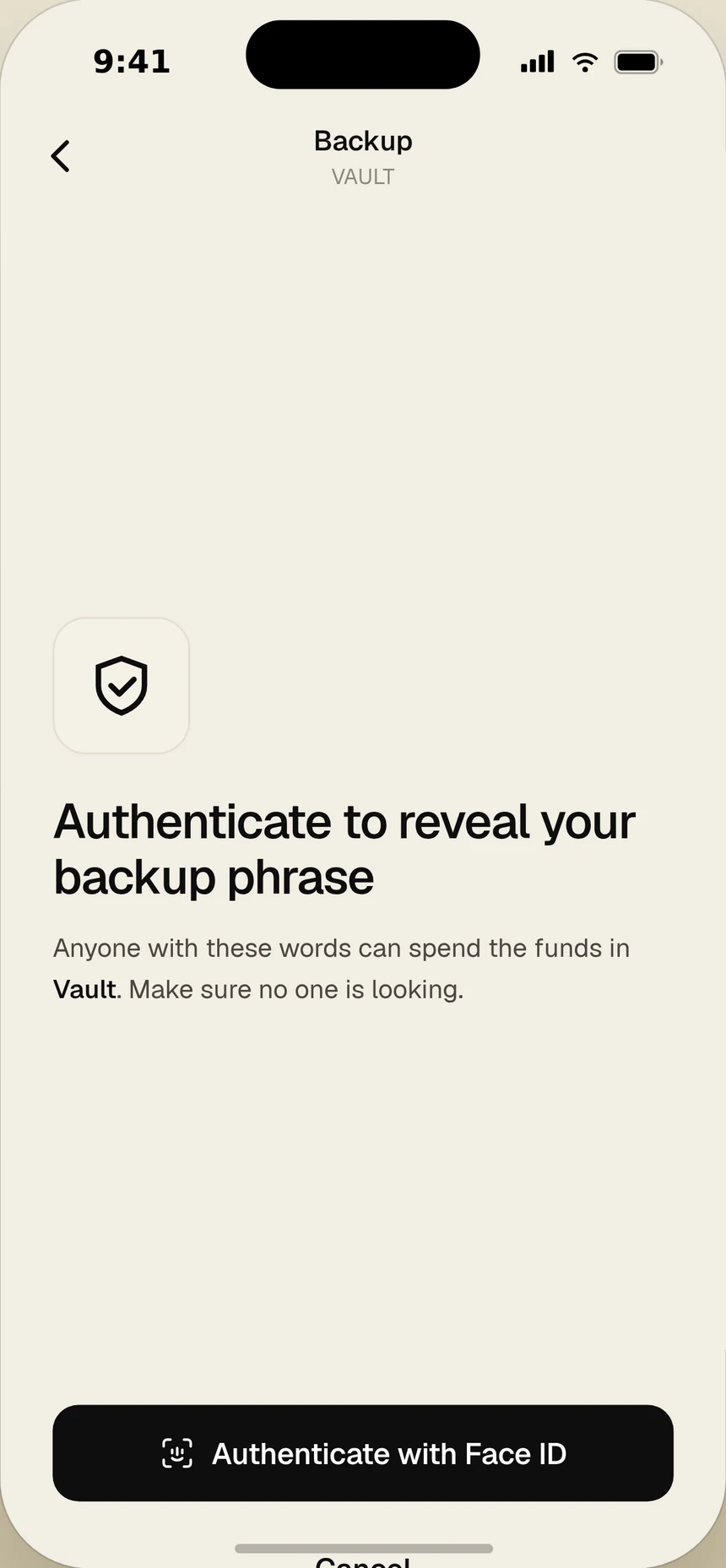
Self-custody is empowering, and it's honest to say it's also a responsibility. Because no company is holding your Bitcoin, there's no support line that can reset your password or reverse a mistake. Self-custody means you are responsible for your keys and recovery phrase.
- Back up your recovery phrase. It is the one thing that can restore your wallet if your device is lost. Write it down, store it offline, and keep it private.
- Never share it. No legitimate person — including anyone claiming to be from Unseizable — will ever ask for your recovery phrase.
- Start small. Move a small amount first, practice sending and receiving, and get comfortable before you hold more.
Self-custody isn't about distrusting everyone. It's about not having to trust anyone with the thing you can hold yourself.
Getting started
You don't have to become a security expert to hold your own keys. A good wallet does the heavy lifting: it generates your keys on-device, guides you through backing up your recovery phrase, and uses hardware-backed key storage so your secrets aren't sitting in plain sight.
Unseizable focuses on Bitcoin and Lightning — on-chain for holding and settling, Lightning for fast everyday payments. It's available for iOS and Android. If you've been meaning to move from an IOU on someone else's books to Bitcoin you actually hold, this is a place to start.
Funding your wallet with Interac e-Transfer, in CAD
No new payment rails to learn. Top up in Canadian dollars with Interac e-Transfer, then hold your Bitcoin in self-custody. Here's how funding works and what to expect.
On-chain vs. Lightning, explained simply
Unseizable holds Bitcoin two ways: on-chain and over Lightning. Here's the plain-language difference, when each one fits, and why you don't have to choose.
Stop reading. Start holding.
Unseizable is a non-custodial Bitcoin wallet for iOS and Android — on-chain and Lightning, with keys that stay on your device.
Free to download · iOS and Android · App Store and Play Store